Precision Combustion: RDF Boiler Grate Control for Industrial Efficiency and Decarbonization
For industrial paper manufacturers utilizing Refuse-Derived Fuel (RDF) for steam and power generation, the primary operational challenge is not the boiler itself, but the inherent volatility of the fuel. Unlike standardized fuels, RDF is a heterogeneous mixture with fluctuating moisture content, varying caloric values, and inconsistent physical properties.
In practical terms, RDF Boiler grate control system is the process of regulating grate movement and airflow so that fuel receives the right exposure to heat and oxygen, allowing it to burn completely while supporting environmental compliance.
An RDF boiler is the heart of the plant, but its fuel is erratic. This article explores the technical necessity of precision grate control, the architectural layers of an optimized Industrial Control System (ICS), and the measurable ROI delivered through predictive automation.
Why RDF Boiler Grate Control Determines Combustion Stability: Thermal Transients and the Failure of Static Control
The fundamental objective of any boiler operation is to maintain a steady steam output to ensure consistent paper machine performance. However, in RDF boilers, the grate acts as the primary combustion platform where the fuel bed is formed. When fuel properties shift—for instance, a transition from dry cardboard to moisture-heavy textile waste—traditional control strategies often fail to adapt.
The "Hunting Effect" and PID Limitations
Most legacy Distributed Control Systems (DCS) utilize standard Proportional-Integral-Derivative (PID) loops based on fixed schedules. These are effective for steady-state fuels like coal, but they struggle with the dead-time lag of an RDF fuel bed.
- Moisture Ingress: A wet batch of fuel enters the grate, leading to a localized drop in bed temperature.
- Reactive Lag: The oxygen level rises because the fuel isn't burning efficiently. The classic controller reacts by slowing the grate or increasing primary air.
- The Thermal Overshoot: By the time the mechanical change (grate speed) takes effect, a drier fuel batch has entered. This leads to a sudden temperature spike and oxygen dip, forcing the operator to intervene manually.
This "hunting" for a set point creates thermal transients that lead to clinker formation and slagging . Slagging on boiler tubes acts as an insulator, reducing heat transfer efficiency and forcing the system to consume more fuel to maintain the same steam pressure.
How Vizen Solutions DCS Enhances Grate Control
The Distributed Control System (DCS) from Vizen Solutions introduces a more adaptive approach to RDF boiler combustion control. Rather than replacing existing operating knowledge, the system builds upon it, using real-time data and predictive logic to continuously adjust grate behavior based on actual combustion conditions.
Key features include dynamic control of grate speed and movement, guided by furnace temperature, oxygen levels, and fuel feed rate. This ensures that fuel remains on the grate for the appropriate residence time and receives the right balance of heat and air for complete combustion.
Effective grate management also depends on maintaining the right balance between primary and secondary air. Too much air can reduce efficiency, while too little can limit combustion. Vizen Solutions’ DCS supports this balance by continuously coordinating grate motion and airflow rather than relying on static settings.
The system also integrates with related boiler subsystems such as fuel feeding and ash handling, enabling coordinated operation across the combustion process. This helps shift operations from reactive interventions toward predictive, optimized control.
Operational ROI
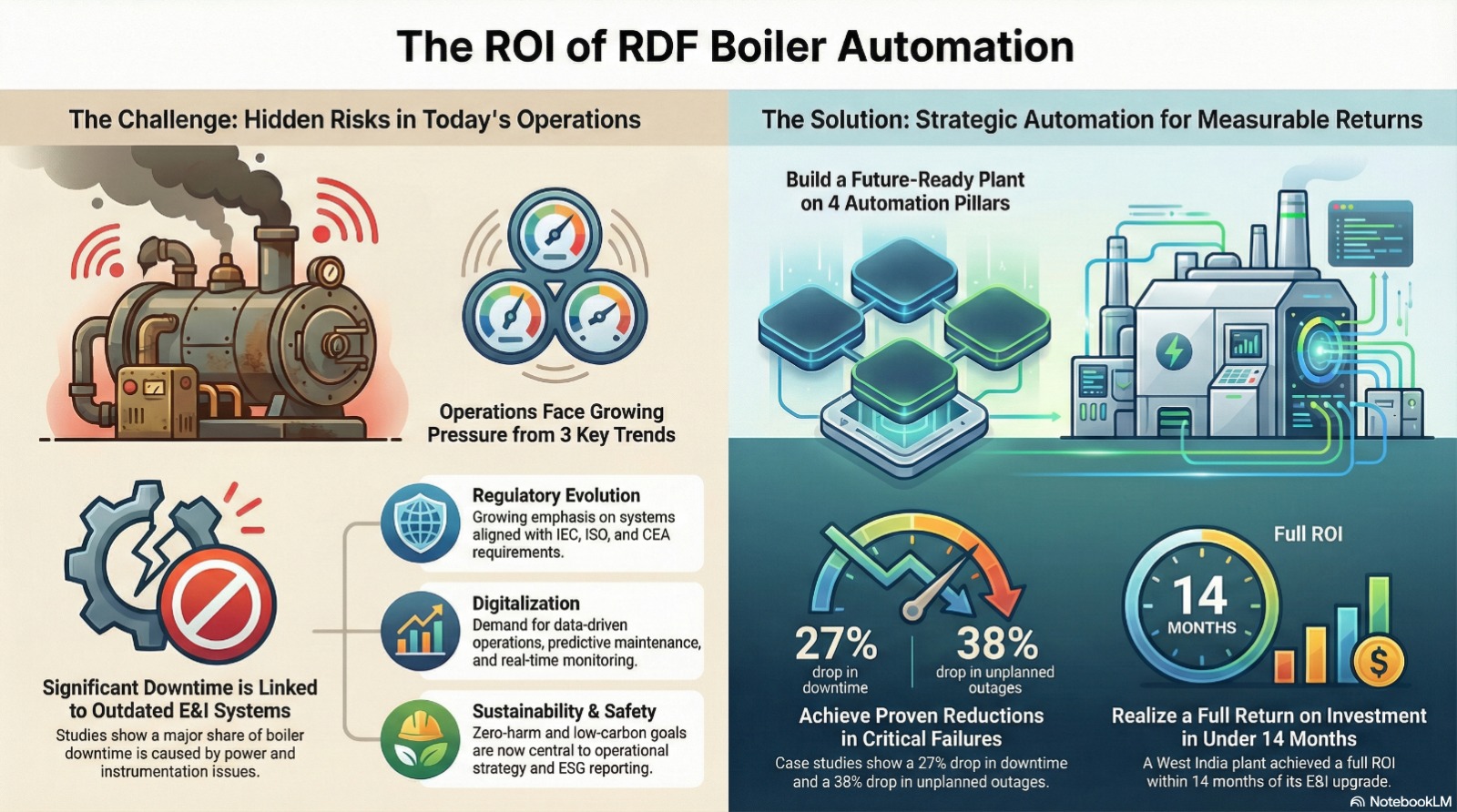
Optimized grate control is not just a technical upgrade; it is a financial necessity. Fuel-related costs form a significant portion of operating expenses, meaning even incremental efficiency improvements deliver meaningful financial benefits.

KPI 1: Steam Flow Optimization
Traditional DCS (Distributed Control System) control results in jagged zig-zags in steam production as the system struggles with fuel moisture. Precision automation achieves a flat-line stabilization .
- Impact: A 5% increase in steam stability typically translates to 5–4 MW of additional power availability without adding a single kilogram of extra fuel.

KPI 2: Combustion Air Stabilization
By coordinating grate motion with primary and secondary air in real-time, the system ensures fuel receives the right exposure to oxygen for complete burn-out.
- Impact: This stabilization leads to a higher burn-out rate in slag (eliminating penalties for rejected waste) and a significant reduction in the additives required for flue gas cleaning.
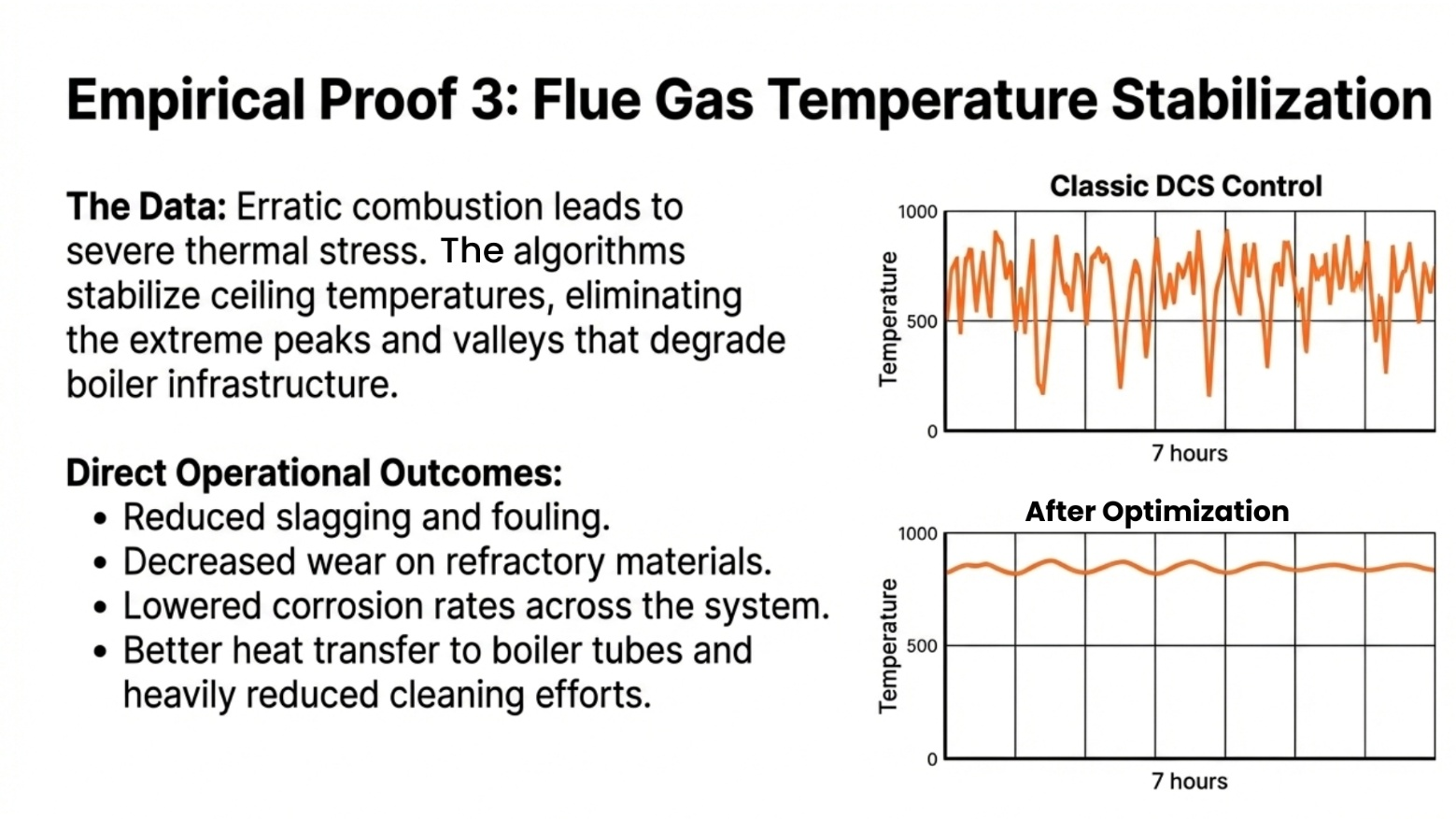
KPI 3: Flue Gas Temperature Stabilization
Volatility in flue gas temperature is the leading cause of slagging and fouling.
- Impact: Stable temperatures lead to less wear on refractory , less corrosion, and reduced cleaning efforts. For a typical mill, this can save an estimated 500–600 hours of unplanned downtime annually .
Operational and Efficiency Benefits
One of the most recognized benefits of advanced grate control is improved combustion efficiency. More complete combustion allows greater heat extraction from RDF fuel, minimizes unburnt residue, and reduces thermal losses.
This results in:

- Improved heat transfer
Stable flames and uniform combustion support efficient heat transfer to boiler tubes, producing more steam from the same quantity of fuel. - Cleaner operations
More complete combustion lowers emissions of carbon monoxide, unburnt hydrocarbons, and fine particulates, supporting environmental performance. - Lower maintenance demand
Smoother grate motion and controlled combustion reduce the likelihood of clinker and slag formation, helping minimize cleaning and repair requirements. - Better fuel utilization
Higher combustion efficiency reduces the cost per unit of energy produced, allowing plants to meet steam demand with less fuel or increase output without additional fuel input.
Fuel Economics from Optimized Operation
Fuel economics play a critical role in RDF boiler project viability. Since fuel-related costs form a significant portion of operating expenses, even incremental efficiency improvements can deliver meaningful financial benefits.
Optimized grate control contributes to:
- Reduced fuel consumption
More complete combustion lowers the quantity of RDF required for the same energy output. - Stable and predictable fuel use
Automated control reduces variability in combustion quality, enabling more accurate fuel planning. - Lower waste and by product handling
Efficient combustion produces less unburned material and ash, reducing handling and disposal efforts. - Extended equipment life
Consistent operation under optimal conditions reduces thermal stress and corrosion, supporting longer maintenance intervals.
Together, these benefits strengthen return on investment while supporting sustainable plant operations.
Technical Considerations and Implementation
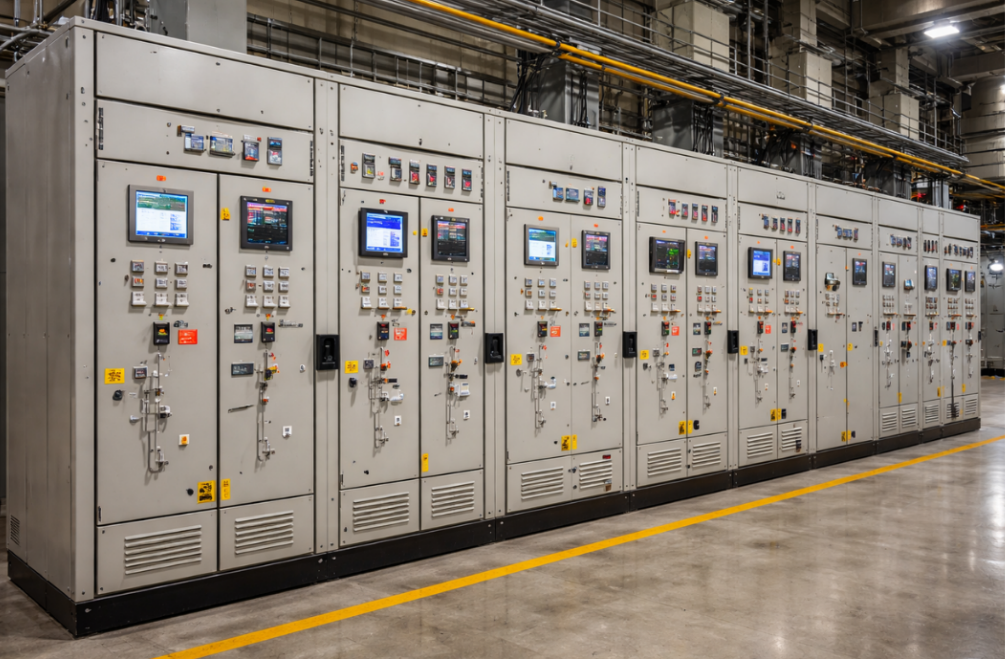
Implementing Vizen Solutions’ DCS for grate control involves integrating advanced sensors and instrumentation into the RDF boiler system.
Typical instrumentation includes oxygen analyzers, temperature sensors across the fuel bed, pressure measurements, and clinker or ash detection devices. These inputs provide real-time data to the DCS, which applies model-based predictive algorithms developed specifically for RDF combustion characteristics.
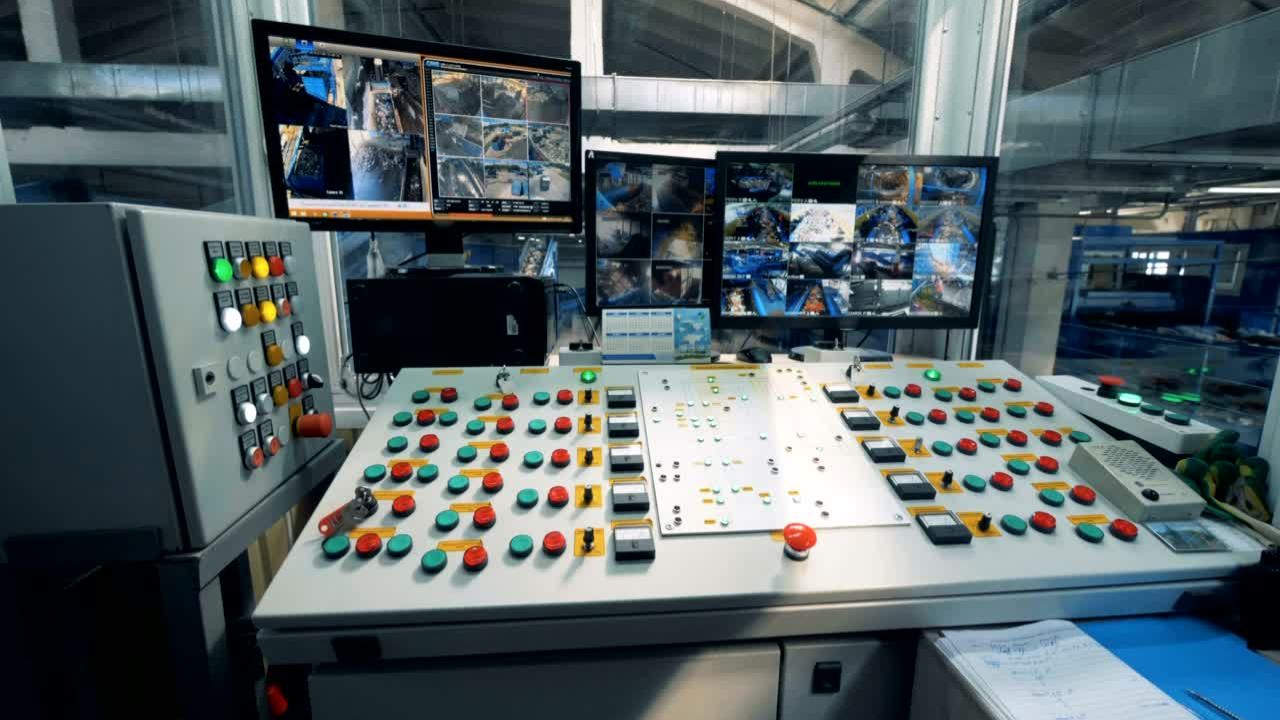
Operators interact with the system through an intuitive HMI, receiving continuous feedback and maintaining the ability to intervene manually when required. The control logic can be configured to reflect site-specific fuel behavior, and over time, system learning further refines grate speed, air ratios, and fuel feed coordination.
Successful implementation relies on close collaboration between boiler engineering teams, instrumentation providers, and Vizen Solutions’ system integrators. Alignment with existing process control architectures ensures smooth integration and long-term reliability.
The Logic Complexity Gap
To resolve the issue of combustion instability, we must first analyze the sheer mathematical complexity of the grate. A modern forward-moving reciprocating grate typically utilizes approximately 30 actuators —including fuel feeders, primary air dampers for multiple zones, secondary air nozzles, and the hydraulic grate movement itself.
The Impact of Clinkers on Availability
Technical analysis suggests that uneven combustion results in hot spots that fuse ash into clinkers. In a typical paper mill, this results in an estimated 500–600 hours of unplanned downtime annually due to cleaning requirements and mechanical wear on the grate.
III. The Solution: High-Resolution Adaptive Automation
Resolving RDF volatility requires a shift from reactive schedules to predictive, real-time data processing . This is achieved by implementing an adaptive control framework that "listens" to the plant's existing instrumentation without requiring mechanical overhauls.
Dynamic Coordination of Air and Grate
Optimization is achieved by coordinating the three main pillars of combustion:
- Mixing Logic: Regulating grate movement to ensure fuel receives the correct exposure to heat and oxygen.
- Residence Time Distribution: Dynamically adjusting grate speed based on furnace temperature and O2 levels to ensure fuel remains on the grate just long enough for complete burn-out.
- Air Stabilization: Balancing primary and secondary air flow continuously rather than relying on static dampers.
Steam and Power Recovery
By stabilizing the steam flow, we achieve a "flat-line" production curve.
- Calculation: If a mill stabilizes steam flow by 5% and reduces O2 fluctuations, the heat transfer efficiency to the boiler tubes increases. For a standard 25 TPH boiler, this stabilization often recovers 5–4 MW of power availability from the same quantity of fuel.
- Slagging Economics: Stabilization of flue gas temperature leads to less fouling. Every 10°C reduction in flue gas temperature (without dropping below the acid dew point) can represent a measurable increase in boiler efficiency.
Future Trends in RDF Boiler Process Control
The DCS platform from Vizen Solutions represents a foundation for broader digital process automation in RDF-based combustion systems.
Future developments are expected to include AI-assisted learning algorithms, real-time emission monitoring and adjustment, and dynamic scheduling linked to electricity demand and plant dispatch requirements. These advancements will further integrate combustion control with overall power generation optimization.
Conclusion: From Volatility to Stability
The technical resolution of RDF combustion issues lies in narrowing the gap between fuel variability and control precision. By moving from 50 to 6,500 functional diagrams and adopting a predictive, bypass-integrated DCS framework, paper mills can transform a volatile boiler into a stabilized power asset. This results in more steam from less fuel , increased electricity production , and reduced mechanical stress —all without the need for mechanical modifications.
If you’re planning an RDF boiler project or panel upgrade, speak with our team to review electrical design, FAT scope, and lifecycle risks before finalising decisions.
For More Information Click on the link - RDF Boiler Automation Solutions